
Ecological wool insulation for walls in efficient houses
Published on 20.07.2026 · Isoflect Insulation technical team
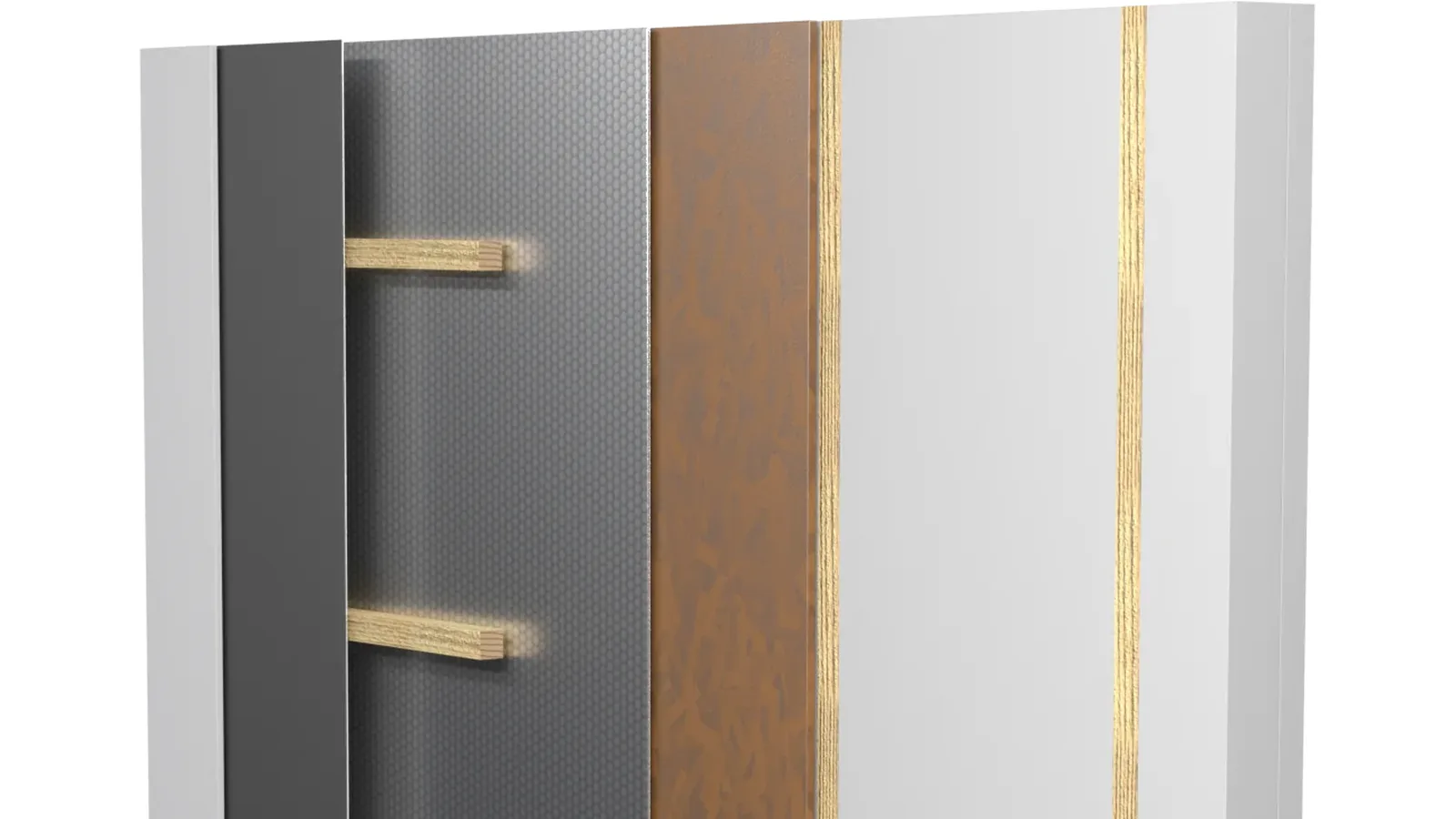
A wall that appears well insulated in winter but becomes cold to the touch, noisy or prone to condensation usually has a system problem, not merely a thickness problem. Ecological insulation wool for walls can contribute decisively to thermal and acoustic comfort, but the result depends on its position within the wall, on airtightness and on correct vapour control.
For a new house, an attic converted into habitable space or the renovation of a lightweight building, the choice of insulation should not be reduced to the question “which material is thicker?”. The correct question is: which build-up protects the wall against heat loss, noise and moisture under the actual conditions of the project?
What ecological insulation wool offers for walls
Ecological insulation wool is used as a thermal insulation and sound-absorbing layer in timber- or metal-framed walls, interior partitions, habitable attics and certain interior lining systems. Depending on the composition of the product, it may have a high content of renewable or recycled raw materials and may be more pleasant to handle than certain types of mineral wool. Nevertheless, the term “ecological” is not in itself an indicator of performance.
For a sound choice, always consult the technical data sheet: thermal conductivity Lambda, density, available thickness, fire behaviour, dimensional stability and the field of application declared by the manufacturer. A lower Lambda value indicates, in principle, a better capacity to limit heat transfer at the same thickness. However, a high-performance material installed with gaps, voids or compressed areas loses part of its advantage.
In a partition wall, the most noticeable benefit may be the reduced transmission of voices, television sound or noise generated by building services. In an exterior wall, the stakes are more complex: the insulation must work together with the layers that limit air infiltration and manage water vapour.
Thickness is chosen according to the wall, not according to habit
There is no universal thickness suitable for every wall. An interior partition primarily targets acoustic comfort, so the insulation thickness is correlated with the depth of the structure and the type of lining. An exterior wall requires a thermal assessment of the entire build-up: structure, insulation, boards, window and door openings, thermal bridges and finishes.
In practice, the wool must fill the cavity of the structure continuously, without being excessively forced. If the material is compressed to fit into a space that is too small, its effective thickness and behaviour may be affected. If gaps remain after installation, air can circulate within the cavity and the wall becomes less predictable in thermal and acoustic terms.
In renovations, the available space is often limited. This is where a genuine compromise arises: a greater thickness may increase thermal performance, but it may reduce the usable floor area of the room or complicate the positioning of sockets, windows and furniture. In such situations, it is not sufficient to choose the thinnest product. It is more effective to configure each layer correctly and to eliminate the losses caused by air infiltration.
Interior walls and exterior walls have different requirements
In interior walls, ecological insulation wool is installed between the studs to reduce the hollow-box effect within the cavity. For better acoustic results, the plasterboard, the number of lining layers, the decoupling strips and the perimeter sealing are equally relevant. Good insulation cannot fully compensate for a very lightweight door or for gaps left around building services.
In exterior walls, the insulation must be protected against uncontrolled air movement and the accumulation of moisture. The interior face and the exterior face of the wall are not treated identically. The positioning of a vapour control membrane or a diffusion membrane depends on the wall build-up, the climate, the exterior finish and the capacity of each layer to allow the construction to dry.
Vapour control makes the difference between a dry wall and one at risk
Water vapour is permanently present in the home: from cooking, showers, drying laundry or simply the everyday use of the space. The problem arises when warm, humid air penetrates through joints into cold zones of the wall. There, the moisture may condense and may affect the timber, the boards, the finishes or even the performance of the insulation.
For this reason, an effective system requires continuity. The appropriate membrane must be installed on the correct side of the assembly and sealed at overlaps, at edges, and around cables, pipes and windows. A membrane installed without sealing tapes at the joints does not provide predictable control of air and vapour.
The difference between a vapour barrier and a membrane with variable diffusion resistance is also essential. The choice is not made automatically. In lightweight-framed walls, particularly in renovation projects or habitable attics, the capacity of the wall to dry in one direction may be as important as limiting the moisture entering from the interior. An analysis of the complete build-up prevents solutions that appear quick but trap moisture within the structure.
Correct installation preserves the declared performance
A quality thermal insulation wool requires careful installation. The material is cut with a small allowance so that it sits firmly between the studs, but without excessive deformation. Edges, corners and the area around building services must be filled precisely. Every gap becomes a zone of heat transfer and may reduce acoustic comfort.
Before closing the wall, verify the continuity of all layers. The insulation must be uniform, cables must not create unnecessary gaps, and the sealing membrane must be correctly taped around the perimeter. Where there are numerous building services, a separate service zone between the membrane and the interior lining is useful. In this way, cables and boxes can be installed without repeatedly perforating the layer that controls air and vapour.
Do not ignore the thermal bridges created by the studs. Timber and metal may conduct heat differently from the insulating material between the profiles. Depending on the project, an additional continuous layer, installed on the interior or the exterior, may reduce this effect. The correct solution depends on the structure, the finish and the available space.
How to compare products without deciding on price alone
The price per roll or per pack is useful, but it does not show the real cost of the system. A correct comparison starts from the area covered at the required thickness and continues with the declared technical performance. An apparently less expensive product may require more packs, may have insufficient thickness or may require additional accessories for installation.
Request clear information on the square metres covered, the effective thickness, Lambda and compatibility with the walls in the project. For a durable result, include in the calculation the sealing tapes, adhesives, sleeves for service penetrations and the appropriate membrane. These components are not optional details but parts of the same solution for thermal and moisture control.
At Isoflect, a well-configured technical choice may combine WOLLE ecological thermal insulation wool with membranes and sealing accessories adapted to the installation area. In this way, you are not merely purchasing a layer of insulation, but building a wall with certain and predictable performance.
When it is worth requesting a technical recommendation
Consult a specialist when the wall has several existing layers, there are signs of dampness, you are renovating a habitable attic, you are using a metal structure or you are installing the insulation on the interior of an exterior wall. These are situations in which an incorrect choice of membrane or of the order of layers may create problems that do not become visible immediately.
Prepare the dimensions of the wall, the type of structure, the available thickness, the interior and exterior finish, as well as photographs of the work area. With this information, the recommendation becomes specific: quantity, thickness, type of membrane and the accessories required for an airtight installation.
Complete comfort in a home does not come from a single material. It comes from an intelligently designed wall, installed without gaps and capable of remaining dry, quiet and efficient for many years.
Not sure which Isoflect product is right for you? See the Isoflect Wolle range or open the package configurator to find out exactly what you need and in what quantity.